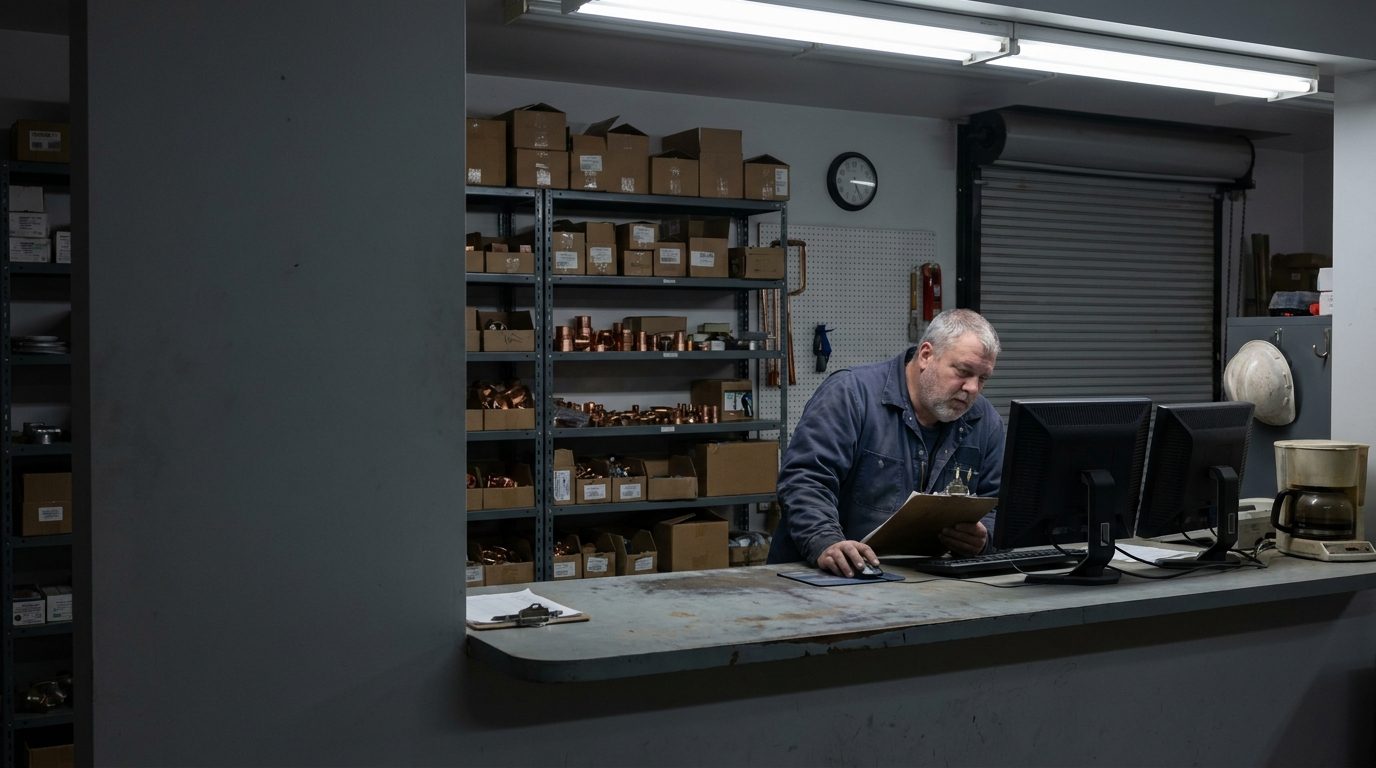
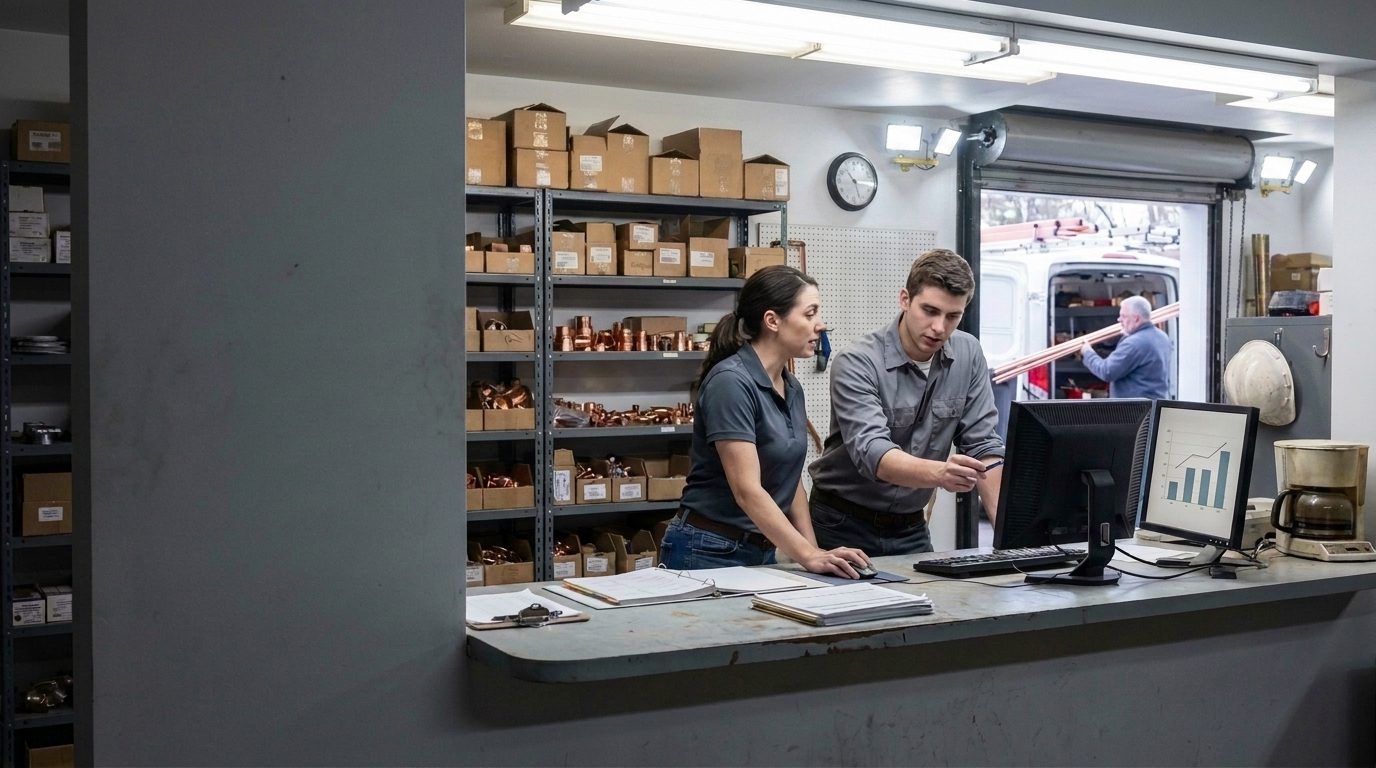
One systemyour team canrun without you.
We work inside your business as a hybrid COO and CIO, put the operation on one system with Odoo, and stay until your team can run it.
- Operations and technology on one track, not two.
- Built with your people, in your building.
- We leave when your team can run it, and not before.
Right now, you are the integration layer.
You cannot leave for a week without something breaking.
- The numbers stay a week behind, so every decision is a guess.
- Your best people leave because the work is chaos.
- You keep paying for tools that still do not talk to each other.
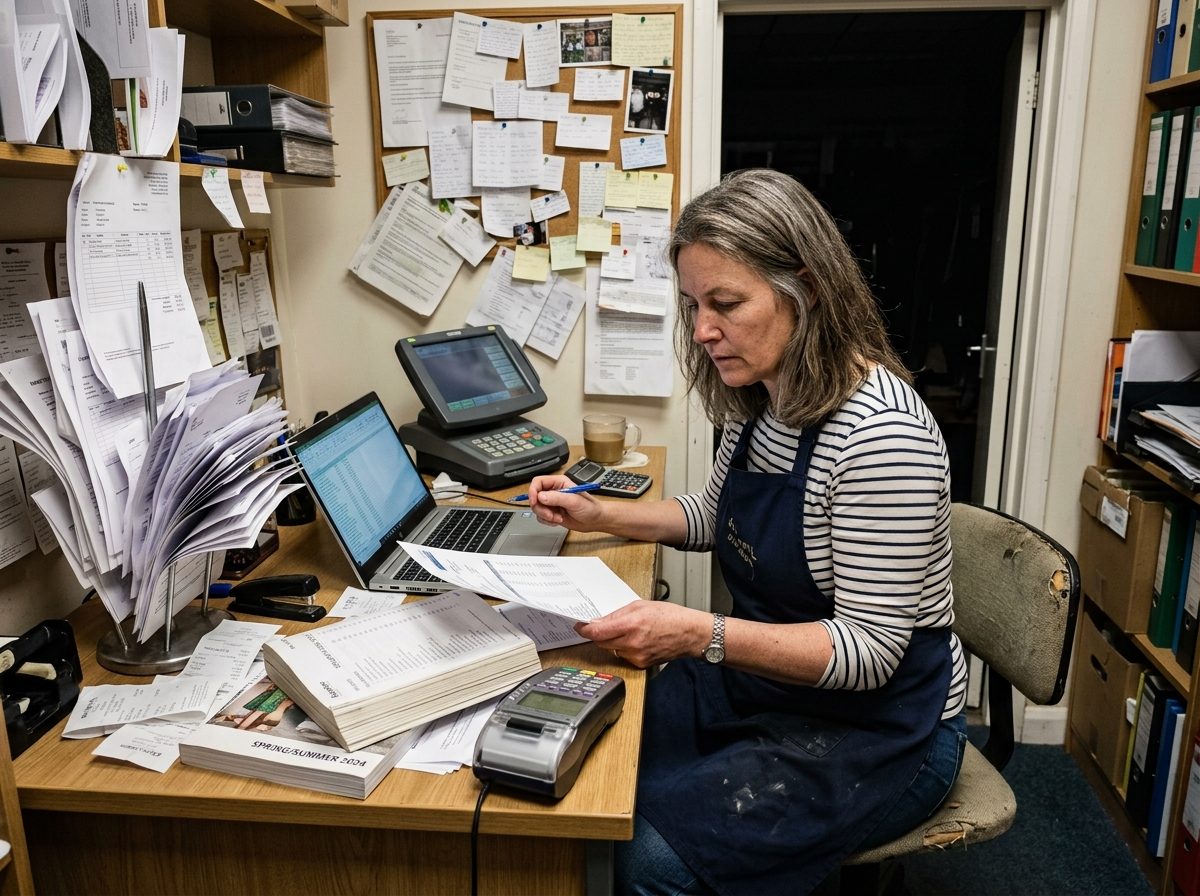
- Quickbooks
- Spreadsheets
- Field App
- Parts Sheet
- Paper Tickets
Five systems. No connections. One person holding it together.
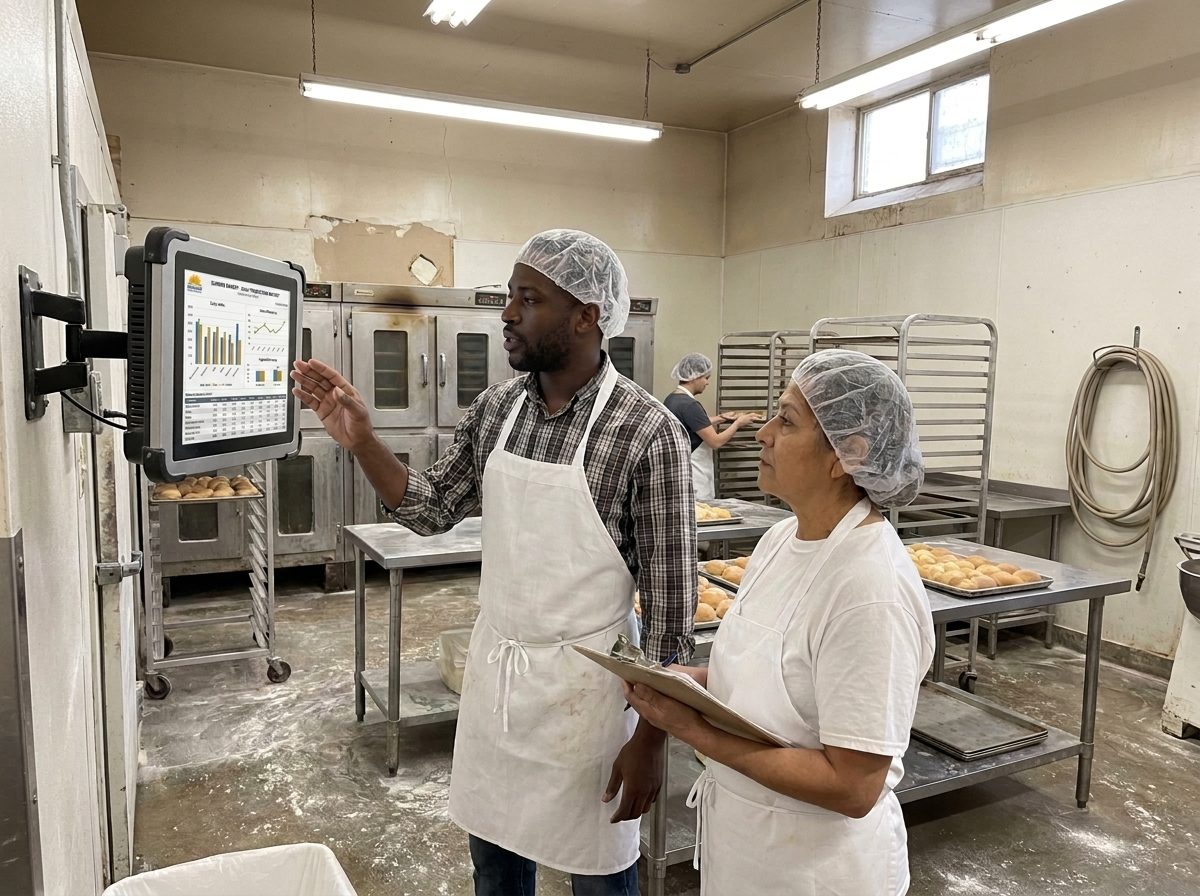
- Accounting
- Inventory
- Field Work
- Purchasing
- Scheduling
The same work. One system of record. You are off the critical path.
We put it on one system. Then we hand you the keys.
We work inside the business as a hybrid COO and CIO, put the operation on one system, and stay until your team can run it.
- 01The manual work is gone.
- 02Your team runs it without you.
- 03You built something that outlasts your attention.
What the end of an engagement looks like

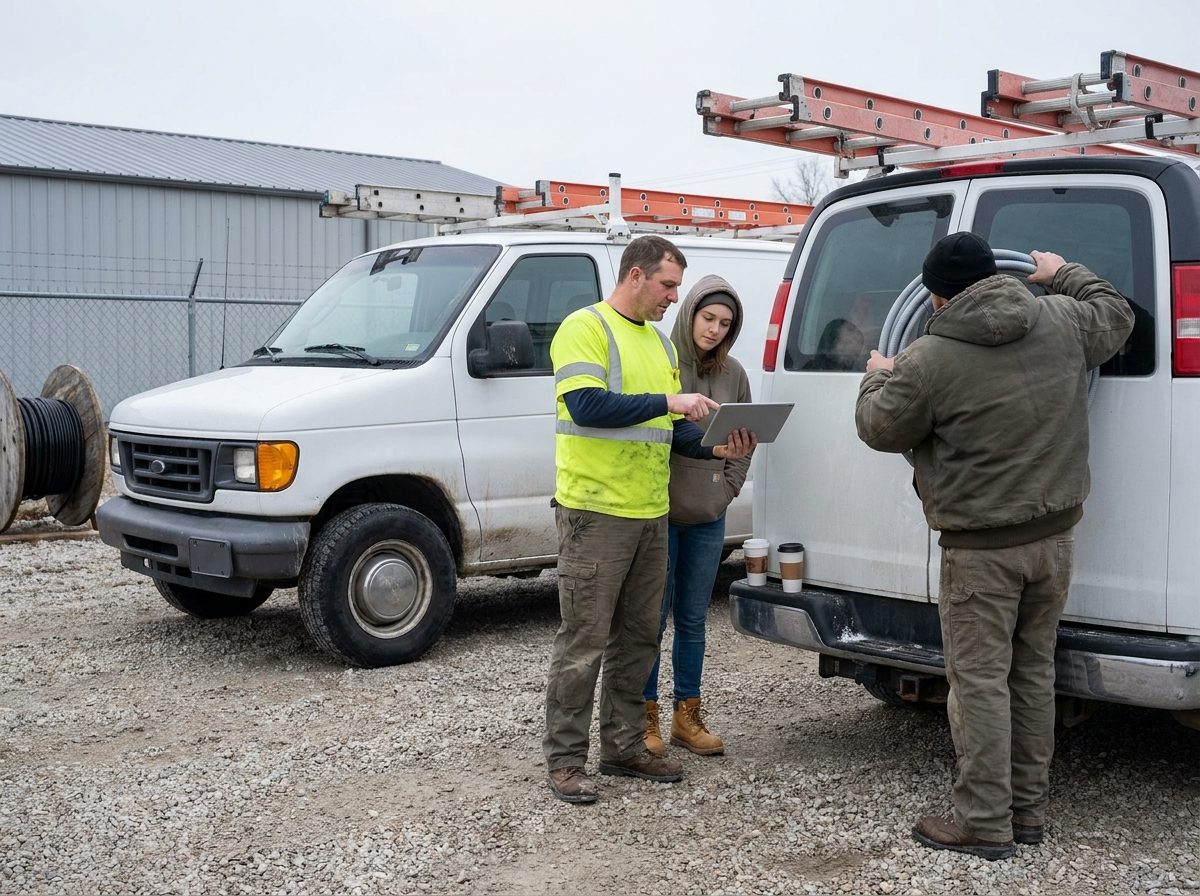
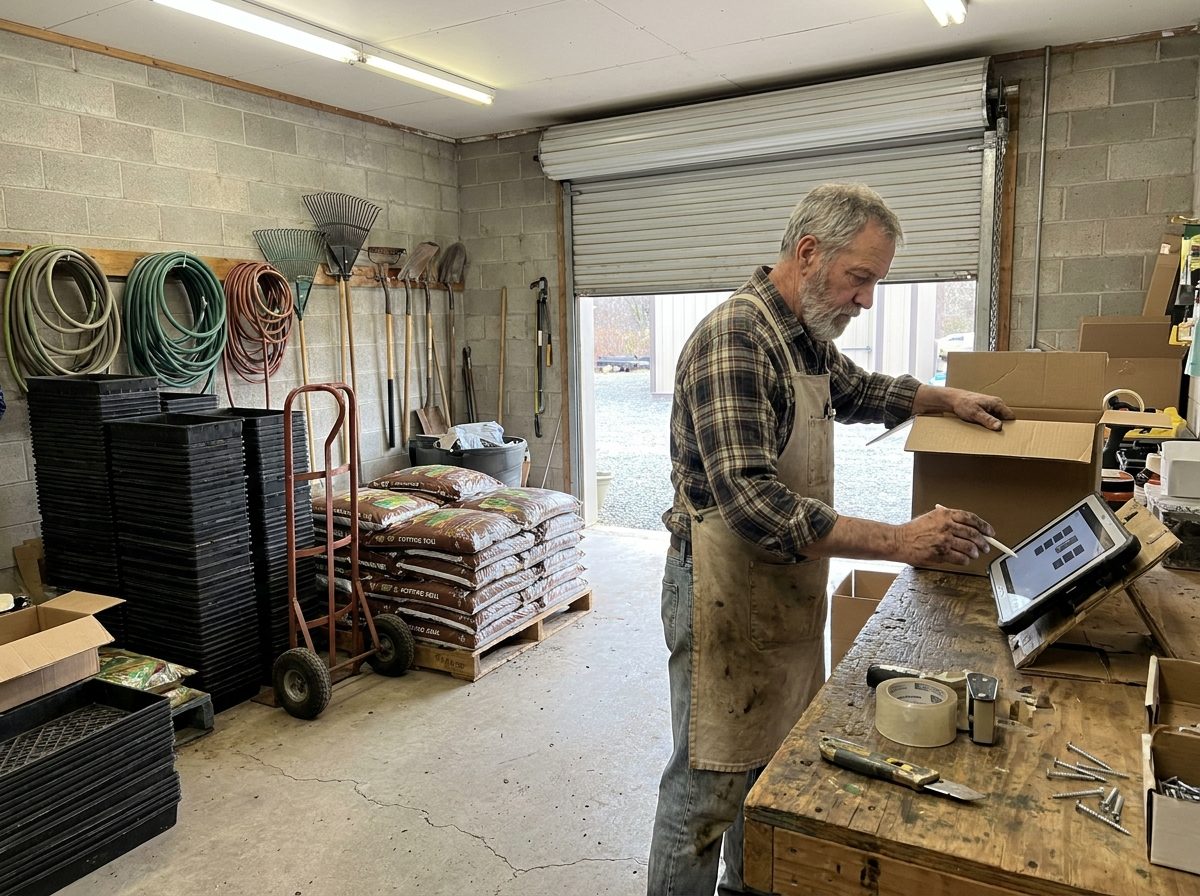
The team on the system, running it themselves, with nobody from ThriveWell in the room. Illustrative scene, not a specific client engagement.
Our first case study is a farm store in Monrovia, Indiana
They opened on a card reader that carried no inventory and no cost data. The store, the farm and a 45-vendor consignment program now run on one system, and they can price a cut of beef from what it actually cost them.
+27%
trailing twelve months, before against after the switch
1,400
products, priced off what they actually cost
634
loyalty members, from a register where about 99% of sales were anonymous
Most of that came from two deliberate decisions rather than organic lift: the store opened twice as many days and moved to a more premium mix. The two systems also count different things, so the only honest comparisons across the switch are revenue per open day and per item.
Henderson Farm Store, ThriveWell client engagement. Figures read from their production system on 26 August 2026.
We have had our own business on the line.
We know what it costs when the systems do not hold.
Tyler has owned and run businesses, built the systems that held them together, and lost one to a bad partnership. This is not a theory about operations. It is the work he had to do when it was his own payroll.
And we have built the thing we are asking you to buy.
ERPs built from scratch. Operations scaled, successfully and unsuccessfully. Every seat in a small business sat in at one point or another. The COO half and the CIO half are one track here because one person has done both.
Engagements are in motion. One case study is posted and the client is named on it. Every figure on it is read from their production system and carries the date it was read. There are no testimonials yet. References on request.
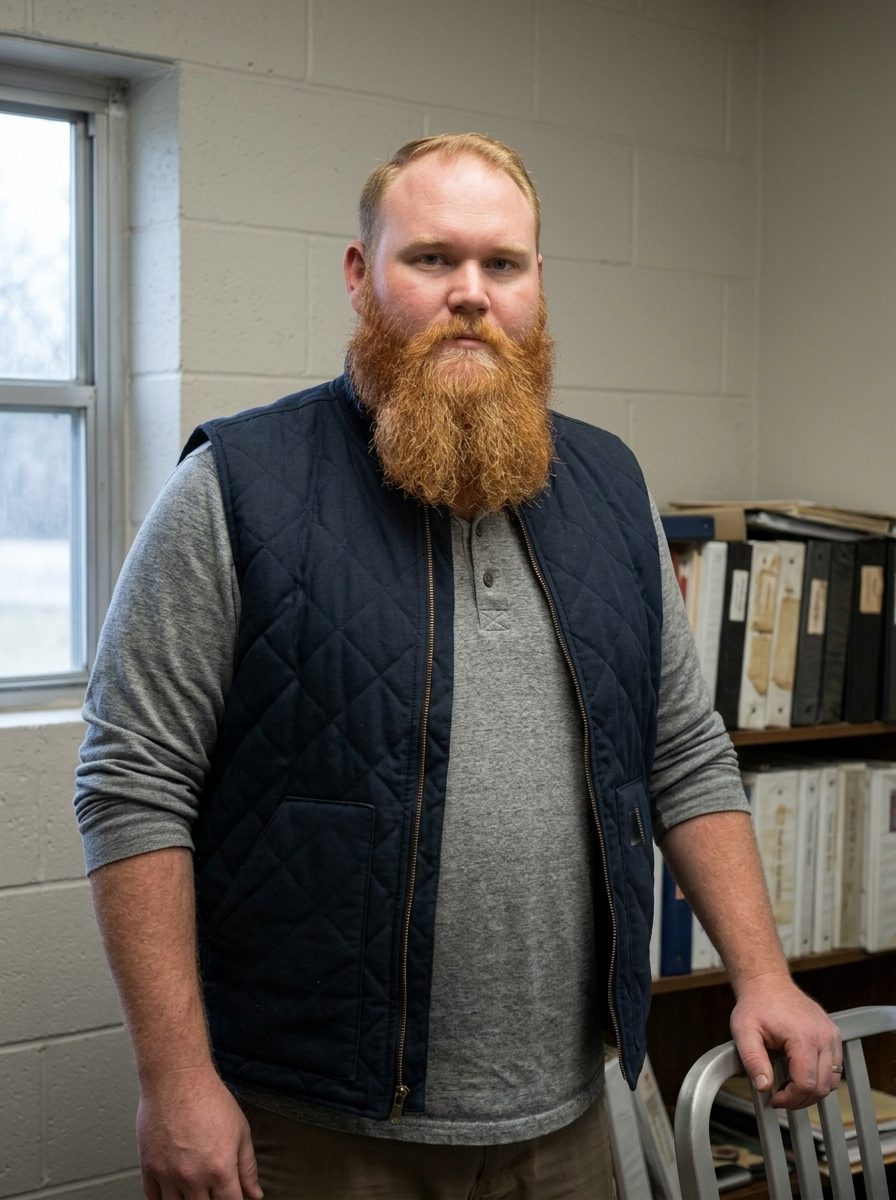
Tyler Johnson, founder and principal. Mooresville, Indiana.
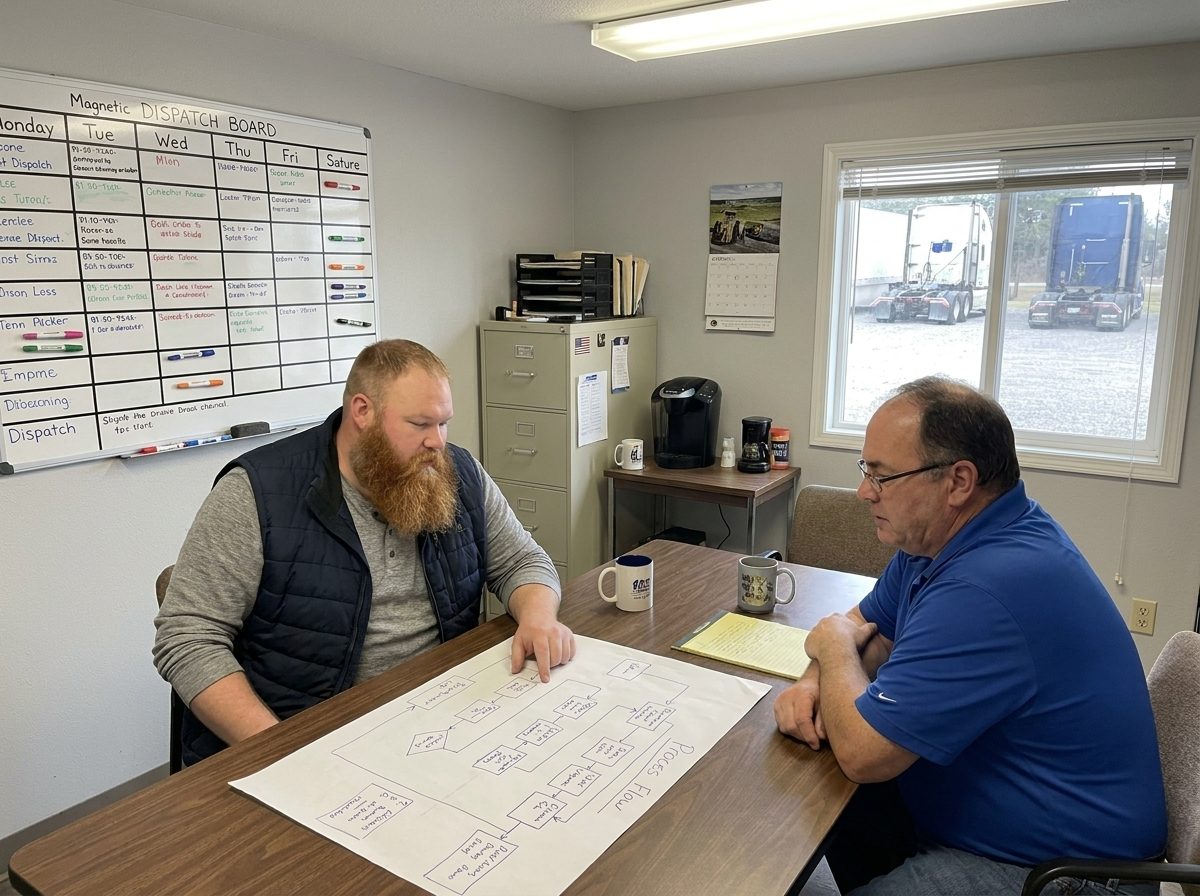
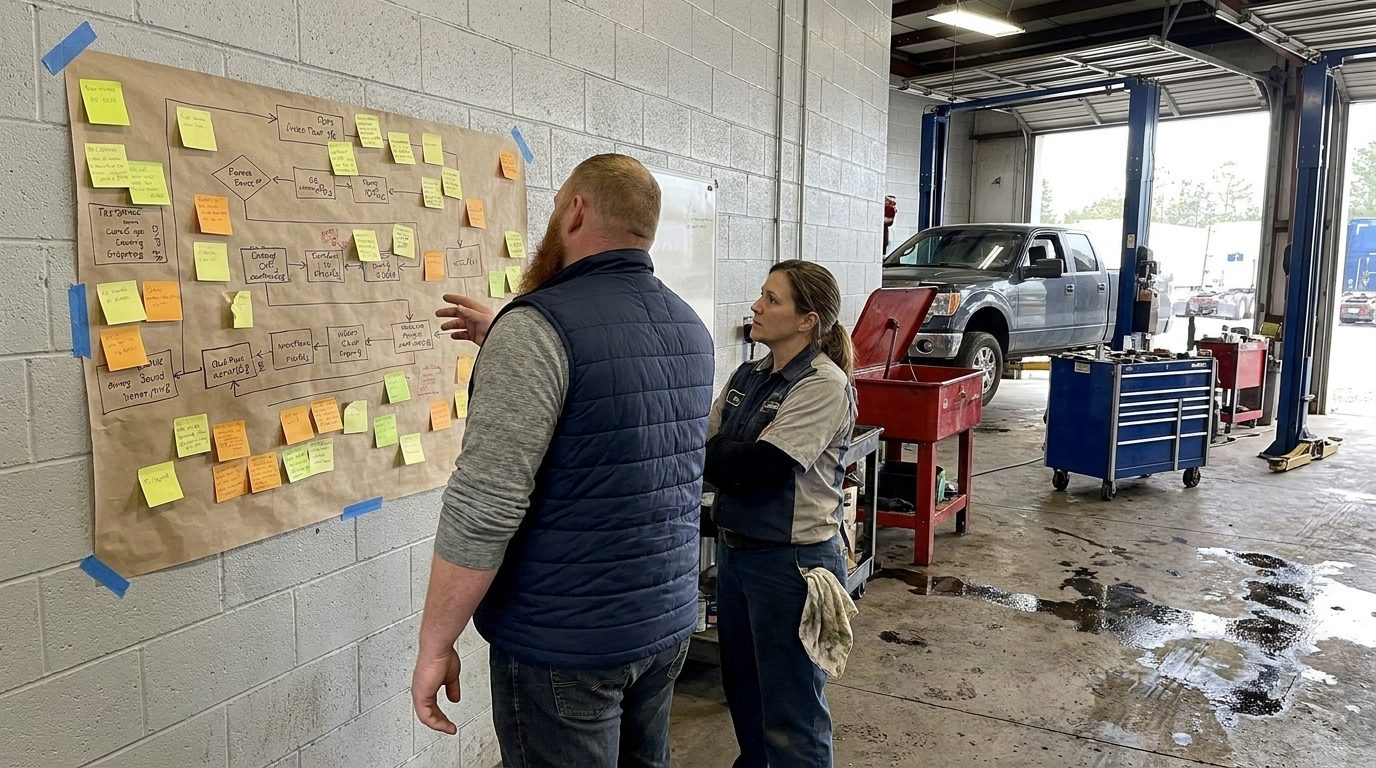
A working session, not a presentation. The diagnosis gets built at the table with the people who have to live with it.
The build plan. Three steps.
You can stop after any one of them. Most of what makes this hard is not knowing what happens next, so here is what happens next.
- 1
We look at the operation with you.
A free operations review. We walk the floor, the systems, and the numbers, with you, not at you.
- 2
We map what is broken and what to fix first.
A written diagnosis. What we found, what it is costing, what we would fix first. Yours to keep either way.
- 3
We build it with you and stay until your team can run it.
Embedded, in the building, doing the work alongside your people. The handoff is the deliverable.
What we agree to
- No long-term contracts.
- You will know what we are doing, why, and when you will see results.
- If we cannot help you, we will say so and point you to someone who can.
What this actually is.
Most growing operations reach a point where the business has outgrown the way it is run. Data sits in three to five disconnected tools, so nobody sees a real number until someone builds a report by hand. The owner becomes the only reliable connection between them. That is not a technology problem or an operations problem. It is both, and hiring for one half rarely fixes it.
ThriveWell works the two halves as one job. The operations side covers process design, accountability, financial visibility, and the leadership cadence a growing team needs. The technology side covers systems strategy, ERP selection and implementation, governance, and automation that earns its place. We work inside the business rather than from the outside, and the engagement is designed to end.
Read the longer versionShow less
The work usually starts with the system of record, because almost everything else is downstream of it. We use Odoo when it earns its place, which is most of the time at this size, and we say so when it does not. Migration, implementation, and training are part of the same job, not a separate phase handed to somebody else. The measure is whether your team can operate it a month after we stop attending the standups.
Alongside that runs the operations work: mapping the processes that actually exist rather than the ones in the binder, moving the knowledge out of one person's head and into something a new hire can learn, and installing a weekly cadence with a scorecard the leadership team reads. Automation comes last on purpose. We map the process first, automate second, and cut whatever would not have paid for itself.
We take engagements we can be present for. If the work can only be done remotely and advisory, it is not a shape we work in, and we will say so on the first call rather than the fourth month.
Why this exists at your size
A full-time CIO or COO runs roughly $200,000 to $350,000 a year in total compensation and takes about six months to hire. Most operations between $500,000 and $10 million in revenue need that judgment long before they can carry that payroll. This is the shape that fits in between. Figures are general market compensation ranges, not a ThriveWell price.
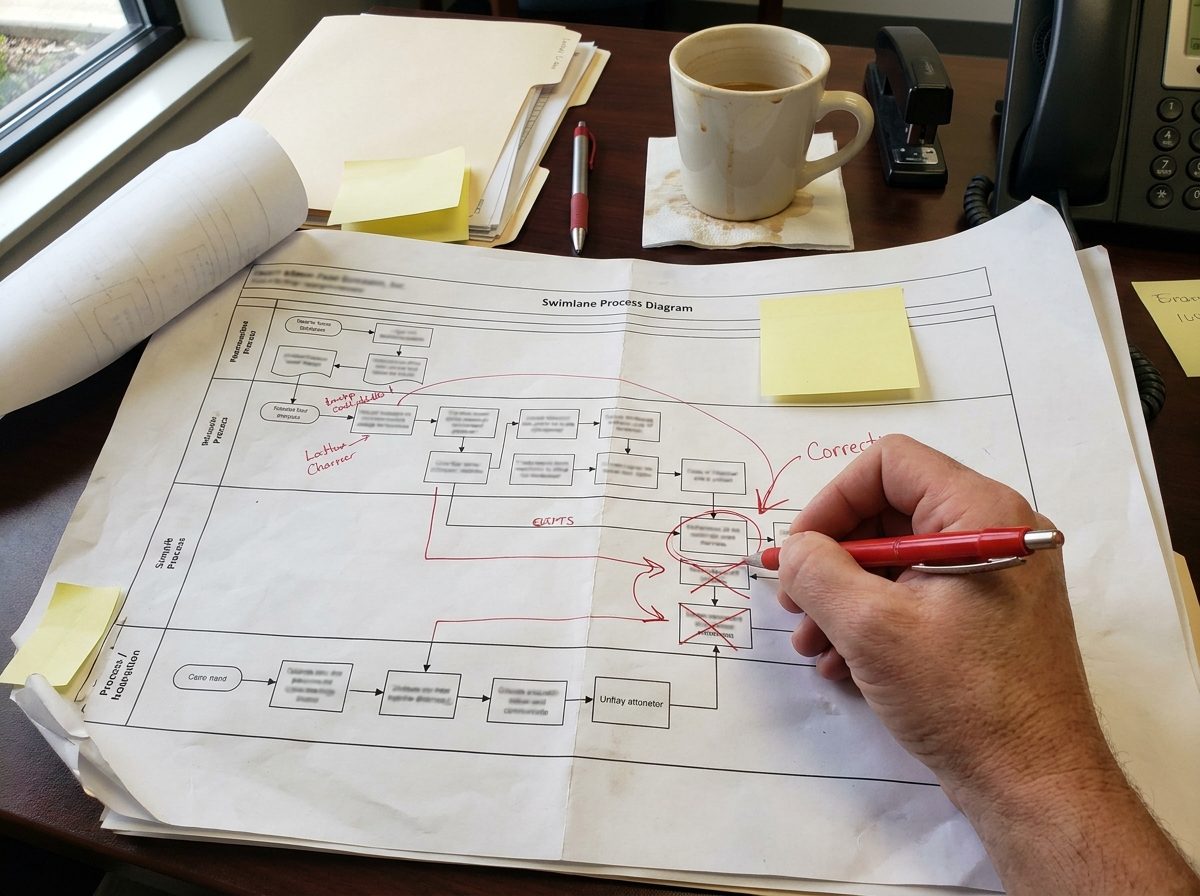
The processes that actually exist, drawn before anything gets automated.
Not ready for a call? Start here.
Eight questions worth answering before you buy anything. It is a worksheet rather than a download: you pick the track that fits your business, put your own numbers in, and it does the arithmetic and tells you what the answer means.
Most owners get something useful out of the first two. The last one works out whether you need a system at all, and for a lot of businesses at this size it comes back saying no.
Free. We ask for your name and email at the door, and that is all we keep. The worksheet itself collects nothing - the arithmetic runs in your browser and your figures stay on your machine, where we cannot see them.
Eight Questions Worth Answering Before You Buy Anything
- What does an hour of my business actually cost me?
- Which of my last ten jobs actually made money?
- What is my quote hit rate telling me about my price?
- How much volume can I afford to lose if I raise prices 3%?
- Profitable on paper, nothing in the bank. Which one is lying?
- Are my customers quietly stretching me from Net 30 to Net 60?
- Is my spreadsheet lying to me?
- Do I need an ERP, or do I need three things to talk to each other?
If it is a fit, let us find out.
Thirty minutes. No deck, no follow-up sequence. We will tell you honestly whether this is a fit, and if it is not, we will tell you who to call instead.
One operator, two to three engagements at a time. If the timing is wrong, we will say so.